LEARNING FROM COMMUNITY–BASED HEALTH INNOVATORS

Learn more about our innovators – Watch our Video

OUR WORK

Collaborative Research and Community of Practice

Strategic Support for Impact and Accountability

Advocacy for Equity-Oriented Policies and Strategies

Sharing Resources

Collaborative Research and Community of Practice

Emerging evidence highlights the effectiveness of social accountability strategies in health workforce education. Yet questions remain unanswered:

  • What impact does social accountability have on health services and community health?
  • How effective are different strategies in diverse contexts?
  • Do graduates from socially accountable programs remain in underserved areas?
  • How crucial are education and student admission policies in retaining health workers in underserved regions?

THEnet’s global research teams collaborate with partners to answer these questions and build a solid evidence base for educating a health workforce that meets local needs.

To get an overview of THEnet’s research since 2008, read a recent article written by THEnet’s research team. To view more articles authored by THEnet members and research team, explore our Resources page and to view videos of our workshops and presentation click here.

WHAT WE ARE LEARNING

Social Return on Investment Studies

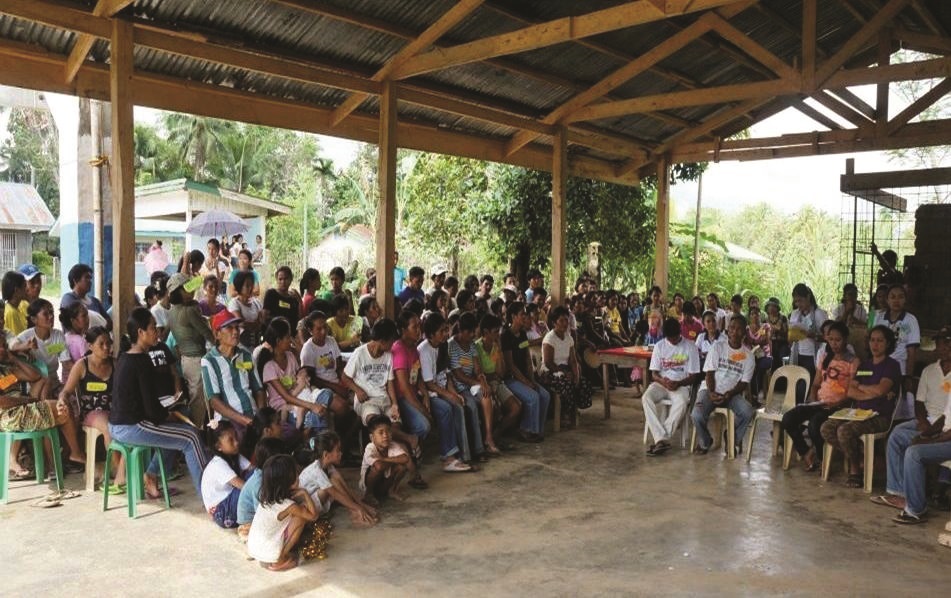
We worked for the Touch Foundation and with the National Institute for Medical Research in Tanzania to conduct a Social Return on Investment study assessing the health, economic, and social benefits of community-based clinical placements, involving feedback from community members themselves. It showed a near doubling of the return on investment in the program.

How medical students experience social accountability

The study examined how eight THEnet schools from various countries integrated their social accountability mission into their medical education and how students perceived that mission. It analyzed how missions that focus on access to care, equity or community service are practically implemented through externalization and internalization steps.

Does a Socially-Accountable Curriculum Transform Health Professional Students?

We surveyed 184 hospital and community facility staff, about THEnet school graduates. They outperformed peers from conventional schools and rated above average in performance, clinical skills, teamwork, professional attitudes, and commitment to equity. This is attributed to a community-based and equity-oriented curriculum.

ADVOCACY FOR EQUITY-ORIENTED POLICIES AND STRATEGIES

THEnet’s advocacy for cross-sector and health system policies and strategies that improve health equity and quality of care for all, incorporate the principles of social accountability, health equity and community engagement. We advocate for partnering with communities and across sectors to ensure that health system policies and strategies that:

  • Strengthen primary care and integrate disease surveillance, especially in underserved communities
  • Address social determinants of health and climate change
  • Align health workforce education strategies with evolving community needs address
  • Reduce inequities and eliminate bias and discrimination

EXAMPLES OF OUR ADVOCACY EFFORTS

Strategic Support for impact and Accountability

Building on outcomes and practical experience across contexts, THEnet supports health professional schools, governments, bilateral and multilateral agencies, and foundations. We conduct evaluations, provide social accountability consulting, develop theories of change, and help institutions build the frameworks and evidence systems they need to demonstrate and improve their impact on the communities they serve.

Our approach draws on the collective expertise of our global network of partner institutions – schools that have built social accountability into their practice in some of the most demanding settings in the world. We engage deeply with clients from scoping through execution, ensuring strategies are grounded in context, co-developed with stakeholders, and built to last.

Equity efforts stall without community partnership, cross-sector collaboration, and learning loops that drive improvements and sustainable impact

EXAMPLES

Regionalizing Workforce Education and Community Health

THEnet participated in a three-phase feasibility study with Expertise France and provided guidance to Agence Française de Développement and the Ministry of Health of the Government of Côte d’Ivoire on strategies to strengthen community health and improving health workforce education, recruitment, and retention in rural areas.

Strengthening Institutional Social Mission Practice - United States

THEnet is working with a US-based social mission-oriented health professional school serving a predominantly underserved community to work with stakeholders to develop a theory of change, build a context-specific social mission framework, and align institutional strategies and evaluations with stated community impact goals.

Evaluating the Impact of USG Investment in Health Professions Education in Africa

THEnet teams conducted the multi-country midterm evaluations of PEPFAR’s $130 million-dollar Medical Education Partnership for Africa and the $30 million-dollar Global Nursing Capacity Building Program. The goal was to assess progress towards expanding and improving health professional education across the continent.

Reviewing and Assessing Adherence to Standards

We review standards and conduct assessments for the World Federation of Medical Education. We are member of the International Social Accountability and Accreditation Steering Committee and helped plan the Global Symposium on Health Workforce Accreditation and Regulation in Istanbul, organized by the WHO, the Global Health Workforce Network and the ECFMG.

Our Resource Center is a searchable repository of tools, articles, reports, and case studies from across disciplines and countries to advance health equity and improve health systems. This repository supports educators, researchers, and practitioners to drive socially accountable projects and improve the quality and equity of healthcare worldwide.

THEnet also creates context-appropriate tools that help institutions, governments, and practitioners design effective programs and measure their outcomes and impacts.

For example, if your education institution wants to engage its stakeholders in assessing how socially accountable they are, they can check out the tools associated with our Social Accountability Framework.

Coleen De Villa

Administrator
Coleen De Villa worked with the Development Academy of the Philippines, WHO, and the Department of Health, excelling in project coordination, research management, and training facilitation.

Dr. Sarah Larkins

MBBS, BMedSci, MPH&TM, PhD, FRACGP, FARGP, GAICD Dean, College of Medicine and Dentistry and Professor, Health Systems Strengthening James Cook University
Dr Sarah Larkins is an experienced research leader, general practitioner and Dean, College of Medicine and Dentistry, James Cook University, comprising disciplines of Medicine, Dentistry, Pharmacy, Public Health and Tropical Medicine and Biomedicine and Molecular Cell Biology.  As a clinician researcher, Sarah has particular skills and experience in health systems and workforce research and Aboriginal and Torres Strait Islander health research and is a recognised expert in social accountability in health professional education. Sarah is also Co-Director of the Anton Breinl Research Centre for Health Systems Strengthening. Sarah has over 180 published peer-reviewed journal articles and several book chapters, with an h-index of 37, more than 4500 citations and well over $98m in grant funding.  She currently supervises 10 HDR students with 20 PhD completions.
Sarah’s particular focus is on collaborating to improve equity in health care services for underserved populations, particularly rural, remote, Indigenous and tropical populations, and on training a health workforce with appropriate knowledge, attitudes and skills for this purpose.  She currently serves as the Convenor, Clinical Leadership Group for the NHMRC-recognised Tropical Australian Academic Health Centre and a member of the National Health and Medical Research Council Research Committee for this triennium. Sarah has three young adult sons and loves travel, hiking and other outdoor activities.

Dr. Charlie Labarda

Board Member

Charlie Labarda, MD, PhD, is a Professor of Medicine and Dean of the School of Health Sciences at the University of the Philippines Manila (UPM-SHS), where he has taught for more than a decade. He is a regular member of the National research Council of the Philippines, belonging to the Medical Sciences Division (Division III). Before joining the medical faculty at UPM-SHS he trained in at the Department of Family and Community Medicine at the Philippine General Hospital. He finished his PhD in the Department of Psychology at The University of Hong Kong, his Master in Development Management from the Asian Institute of Management (high honors), Doctor of Medicine (cum laude) at the Our Lady of Fatima University-College of Medicine, and his undergraduate Social Sciences studies (cum laude) at UP Tacloban College. He was a topnotcher in the Physician Licensure Examination (8th place).

He served as the Unit Faculty Representative to the All UP Academic Employees Union-Manila Chapter. He is also part of the UPM-SHS core faculty for the Leadership and Development Program (LDP) capacitating local chief executives (governors and mayors) in strengthening their health systems to achieve the goals of universal health care and sustainable development goals (SDGs) of the Philippine government. He also volunteers as civil society partner of DSWD in its 4Ps Program as Vice-Chairperson for the National Independent Monitoring Committee (NIMC). He also helps in various DOH and WHO projects in line with his advocacies around medical education, health equity, disaster public health, resilient and healthy communities, and mental health especially in low resource settings. Recently he became part of the Data Science for Public Policy Working Group based at the UP Center for Integrative and Development Studies (UP-CIDS), promoting the use of data science for public policy.

Dr. Shafik Dharamsi

Board Member
Dr. Dharamsi is Professor and Dean of the School of Public Health at the University of North Texas Health Science Center (UNTHSC) in Forth Worth, Texas. He received his Ph.D. in 2003 from the University of British Columbia in Vancouver, Canada. After completing his doctoral education, he worked with the Aga Khan Development Network as the Regional Director of an innovative, community-engaged early childhood development initiative in East Africa (Kenya, Tanzania & Uganda). He then returned to Canada to join the University of British Columbia. His research focuses on social accountability and health professions education, global health, and social determinants of health.
He led the creation of an extensive, university-wide project that resulted in an innovative flagship initiative called the Ethics of International Engagement and Service Learning, which received the prestigious UBC Graduating Class Award for campus-wide initiatives that are “creative, support social justice, support sustainability, and support volunteer programs on campus.” Prior to joining UNTHSC, Dr. Dharamsi served in various academic leadership positions including as Senior Advisor the Provost at New Mexico State University, Dean of the College of Health Sciences at the University of Texas at El Paso, and Founding Associate Dean for the new School of Osteopathic Medicine at the University of the Incarnate Word in San Antonio. His work has been published widely and funded through prominent foundations and research agencies. He has extensive education, research and community development experience in Asia and Africa, as well as in Canada and the U.S.

Dr. Dharamsi currently serves as the Dean of the College of Public Health at the University of North Texas Health Science Center. With 25 years of experience, he brings an interdisciplinary background and extensive international and community development experience as an educator, scholar, and administrator.

Dr. Dharamsi’s academic journey began in Canada, where he earned an interdisciplinary PhD from the University of British Columbia (UBC) and achieved tenure in the Department of Family Medicine. He also co-directed the UBC Center for International Health.


His work is at the intersection of public health, medical humanities, global health, ethics, and the social determinants of health.


Born in Tanzania, Dr. Dharamsi is a first-generation high school and college graduate. He is deeply committed to student success. He began his career as an inner-city schoolteacher.


His career includes leadership roles as regional director for early childhood development and poverty alleviation in East Africa with the Aga Khan Development Network, founding associate dean of the School of Osteopathic Medicine at the University of the Incarnate Word in San Antonio, dean of the College of Health Sciences at the University of Texas at El Paso, and senior advisor to the provost at New Mexico State University.


Dedicated to advancing public health, Dr. Dharamsi actively serves on the boards of several national and international organizations, including the ASPPH Global Engagement and Partnerships Advisory Committee.

Bjorg Pálsdóttir, MPA

Chief Executive Officer and Co-Founder of THEnet
Before co-founding THEnet in 2008, Björg served as a consultant to organizations, governments and institutions such as the National Academy of Sciences, the World Bank and the Bill and Melinda Gates Foundation.
She is a member of the Institute of Medicine´s Global Forum on Innovation in Health Professional Education, chairing an Innovation Collaborative on on Learning through Community Engagement. Earlier she co-founded the Center for Global Health at New York University School of Medicine, and worked for the International Rescue Committee, an emergency relief and development organization as a Regional Coordinator for East and Central Africa.