Blog from Dr. Kunting at AdZU-School of Medicine on how they address social determinants of health

Partnering Community Medicine and Biomedical Engineering – Melding Social Justice-Based Health Intervention and Technology for Peace and Development: An Ateneo de Zamboanga University Initiative

Afdal B. Kunting, MD, MPH, FPCP, Ateneo de Zamboanga University- School of Medicine and College of Biomedical Engineering

The Ateneo De Zamboanga University (AdZU) has a long and rich history of social justice. The concept of social Justice has been evident in the activities and programs of ADZU long before the term became fashionable. The School of Medicine (SOM) is one of the university’s flagship programs that continually uphold its social justice mandate. The SOM opened in 1994 with one of the most innovative medical education programs in the Philippines. Aside from using Problem Based Learning (PBL) as its mode of teaching, the school also engaged in the longest community immersion in the country. Students spend half of their medical education in rural and underserved communities in the region. This extended immersion allows the development of long term Community Health Plans (CHPs) together with an engaged community. This approach of community engagement is central to the concept of social justice that the ADZU advocates. This approach welcomes the community’s concept of health needs and priorities and enables students to tap into the vast local knowledge and cultural experiences in the conduct of activities. This also gives the community a sense of ownership of the CHPs and helps in long-term implementation and sustainability
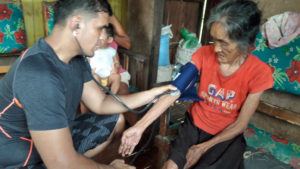
Students from Ateneo de Zamboanga School of Medicine doing rural community outreach in Mindanao, the Philippines

. The SOM methodology is a departure from the usual top-down planning activities formulated by local government units (LGUs) and health personnel which do not reflect the felt needs of the people. Another key concept being applied by the SOM is the use of inter-sectoral collaboration especially with traditional allies such as teachers, social workers, agriculturists, and security forces to name a few. These approaches increase the number of people working for the project and maximize the limited resources available in the community.

While the SOM has been successful in addressing some of these social realities, there are still many enduring problems. Getting current and complete data from the community has been difficult. Access to safe water remains a challenge while sanitation and poor waste disposal still contribute to disease burden. It seems that the SOM approach is inadequate to address some of the social determinants of health. How can these issues be addressed? Perhaps partnering with non-traditional allies and the use of technology and engineering can be a potential solution?

With the hope of addressing these gaps, in 2018, the AdZU together with its College of Biomedical Engineering offered the Bachelor of Science in Biomedical Engineering (BSBME) program. Similar to that of the SOM, the BSBME also apply a community immersion approach to its program. The students are partnered with medical students from SOM and assigned to an underserved community where they work together to identify challenges and develop Community Health Plans (CHP) that can be addressed with biomedical engineering solutions or regular engineering concepts. After a year of exposure, potential solutions include health kiosks that will collect demographic and health-related data, locally produced carbon-based water filters. and low-cost biogas reactors that students have produced.
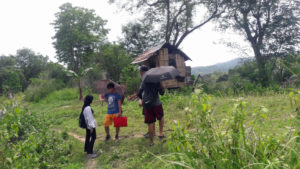
Social justice-based interventions combined with technology brought to rural and underserved areas of the region restore a sense of hope to the population. It is a well-known fact that one of the drivers of secessionist or separatist movements is the sense of hopelessness among marginalized youth. The intervention seeks to assist and stimulate community-based initiatives and become a catalyst for development.

This collaborative learning method is a process of working together down to the community level that allows everyone to contribute to addressing the social determinants of health. The comprehensive way of looking at the problems in the community areas can provide direction on how to create a more enabling environment for the people to co-create. Ensuring that people are empowered in the health programs by formulating and implementing policies, in planning, developing, designing and making technology readily available to the poorest segment of society to achieve change and eventually lead to contribute and strengthen the peace and development of Zamboanga Peninsula.

Author details: 
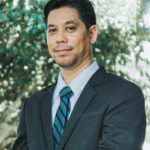
Dr. Kunting is one of the earliest graduates of the Ateneo de Zamboanga University School of Medicine. He has worked for nearly a decade in the field of public health, working first as a Municipal Health Officer in the Municipality of Sergio Osmena and then a District Health Officer of the City of Zamboanga. He finished his Internal Medicine Residency at the Zamboanga City Medical Center with an elective on Heart Failure at the Foothills Medical Center in Alberta Canada.He has been a faculty of the ADZU-SOM since passing his licensure examination in 2000. He was initially a community preceptor then later Associate Dean for Community Affairs. He is currently part of the Research Committee of the school. He was part of several school programs to include the development of the community medicine component of the Family Medicine Specialist Program of the Faculty of Health Sciences, National University of Laos. He was also the organizer of the Rural Area Medicine Philippines (RAMP), a training program for rural physicians similar to the Rural and Remote Medicine Course of the Society of Rural Physicians of Canada. He is a pioneer faculty of the College of Biomedical Engineering (BME). He supervises the community exposure of the BME students and teaches the course on Anatomy, Physiology, Medical Devices and Gadgets for Engineers.

Coleen De Villa

Administrator
Coleen De Villa worked with the Development Academy of the Philippines, WHO, and the Department of Health, excelling in project coordination, research management, and training facilitation.

Dr. Sarah Larkins

MBBS, BMedSci, MPH&TM, PhD, FRACGP, FARGP, GAICD Dean, College of Medicine and Dentistry and Professor, Health Systems Strengthening James Cook University
Dr Sarah Larkins is an experienced research leader, general practitioner and Dean, College of Medicine and Dentistry, James Cook University, comprising disciplines of Medicine, Dentistry, Pharmacy, Public Health and Tropical Medicine and Biomedicine and Molecular Cell Biology.  As a clinician researcher, Sarah has particular skills and experience in health systems and workforce research and Aboriginal and Torres Strait Islander health research and is a recognised expert in social accountability in health professional education. Sarah is also Co-Director of the Anton Breinl Research Centre for Health Systems Strengthening. Sarah has over 180 published peer-reviewed journal articles and several book chapters, with an h-index of 37, more than 4500 citations and well over $98m in grant funding.  She currently supervises 10 HDR students with 20 PhD completions.
Sarah’s particular focus is on collaborating to improve equity in health care services for underserved populations, particularly rural, remote, Indigenous and tropical populations, and on training a health workforce with appropriate knowledge, attitudes and skills for this purpose.  She currently serves as the Convenor, Clinical Leadership Group for the NHMRC-recognised Tropical Australian Academic Health Centre and a member of the National Health and Medical Research Council Research Committee for this triennium. Sarah has three young adult sons and loves travel, hiking and other outdoor activities.

Dr. Charlie Labarda

Board Member

Charlie Labarda, MD, PhD, is a Professor of Medicine and Dean of the School of Health Sciences at the University of the Philippines Manila (UPM-SHS), where he has taught for more than a decade. He is a regular member of the National research Council of the Philippines, belonging to the Medical Sciences Division (Division III). Before joining the medical faculty at UPM-SHS he trained in at the Department of Family and Community Medicine at the Philippine General Hospital. He finished his PhD in the Department of Psychology at The University of Hong Kong, his Master in Development Management from the Asian Institute of Management (high honors), Doctor of Medicine (cum laude) at the Our Lady of Fatima University-College of Medicine, and his undergraduate Social Sciences studies (cum laude) at UP Tacloban College. He was a topnotcher in the Physician Licensure Examination (8th place).

He served as the Unit Faculty Representative to the All UP Academic Employees Union-Manila Chapter. He is also part of the UPM-SHS core faculty for the Leadership and Development Program (LDP) capacitating local chief executives (governors and mayors) in strengthening their health systems to achieve the goals of universal health care and sustainable development goals (SDGs) of the Philippine government. He also volunteers as civil society partner of DSWD in its 4Ps Program as Vice-Chairperson for the National Independent Monitoring Committee (NIMC). He also helps in various DOH and WHO projects in line with his advocacies around medical education, health equity, disaster public health, resilient and healthy communities, and mental health especially in low resource settings. Recently he became part of the Data Science for Public Policy Working Group based at the UP Center for Integrative and Development Studies (UP-CIDS), promoting the use of data science for public policy.

Dr. Shafik Dharamsi

Board Member

Dr. Dharamsi is Professor and Dean of the School of Public Health at the University of North Texas Health Science Center (UNTHSC) in Fort Worth, Texas. He received his Ph.D. in 2003 from the University of British Columbia in Vancouver, Canada. After completing his doctoral education, he worked with the Aga Khan Development Network as the Regional Director of an innovative, community-engaged early childhood development initiative in East Africa (Kenya, Tanzania & Uganda). He then returned to Canada to join the University of British Columbia. His research focuses on social accountability and health professions education, global health, and social determinants of health.

He led the creation of an extensive, university-wide project that resulted in an innovative flagship initiative called the Ethics of International Engagement and Service Learning, which received the prestigious UBC Graduating Class Award for campus-wide initiatives that are “creative, support social justice, support sustainability, and support volunteer programs on campus.” Prior to joining UNTHSC, Dr. Dharamsi served in various academic leadership positions including as Senior Advisor the Provost at New Mexico State University, Dean of the College of Health Sciences at the University of Texas at El Paso, and Founding Associate Dean for the new School of Osteopathic Medicine at the University of the Incarnate Word in San Antonio. His work has been published widely and funded through prominent foundations and research agencies. He has extensive education, research and community development experience in Asia and Africa, as well as in Canada and the U.S.

Dr. Dharamsi currently serves as the Dean of the College of Public Health at the University of North Texas Health Science Center. With 25 years of experience, he brings an interdisciplinary background and extensive international and community development experience as an educator, scholar, and administrator.

Dr. Dharamsi’s academic journey began in Canada, where he earned an interdisciplinary PhD from the University of British Columbia (UBC) and achieved tenure in the Department of Family Medicine. He also co-directed the UBC Center for International Health.


His work is at the intersection of public health, medical humanities, global health, ethics, and the social determinants of health.


Born in Tanzania, Dr. Dharamsi is a first-generation high school and college graduate. He is deeply committed to student success. He began his career as an inner-city schoolteacher.


His career includes leadership roles as regional director for early childhood development and poverty alleviation in East Africa with the Aga Khan Development Network, founding associate dean of the School of Osteopathic Medicine at the University of the Incarnate Word in San Antonio, dean of the College of Health Sciences at the University of Texas at El Paso, and senior advisor to the provost at New Mexico State University.


Dedicated to advancing public health, Dr. Dharamsi actively serves on the boards of several national and international organizations, including the ASPPH Global Engagement and Partnerships Advisory Committee.

Bjorg Pálsdóttir, MPA

Chief Executive Officer and Co-Founder of THEnet
Before co-founding THEnet in 2008, Björg served as a consultant to organizations, governments and institutions such as the National Academy of Sciences, the World Bank and the Bill and Melinda Gates Foundation.
She is a member of the Institute of Medicine´s Global Forum on Innovation in Health Professional Education, chairing an Innovation Collaborative on on Learning through Community Engagement. Earlier she co-founded the Center for Global Health at New York University School of Medicine, and worked for the International Rescue Committee, an emergency relief and development organization as a Regional Coordinator for East and Central Africa.